3″
Typical nominal R-10
Light shops & storage
Everyday condensation control and a finished white interior when the building is unconditioned or lightly used.
Roof & Wall Systems
The system most PEBs actually get: blanket insulation over the purlin, white-faced / vinyl-reinforced facing, in 3″, 4″, and 6″.
Why Insulate a PEB
Steel buildings sweat and they dump heat. Insulation is how you keep the shell quiet, dry, and usable year-round in Middle Tennessee.
Two systems cover almost every shop, barn, and commercial PEB we quote. The first is the one most buildings actually get. The second is how you seriously raise R-value.
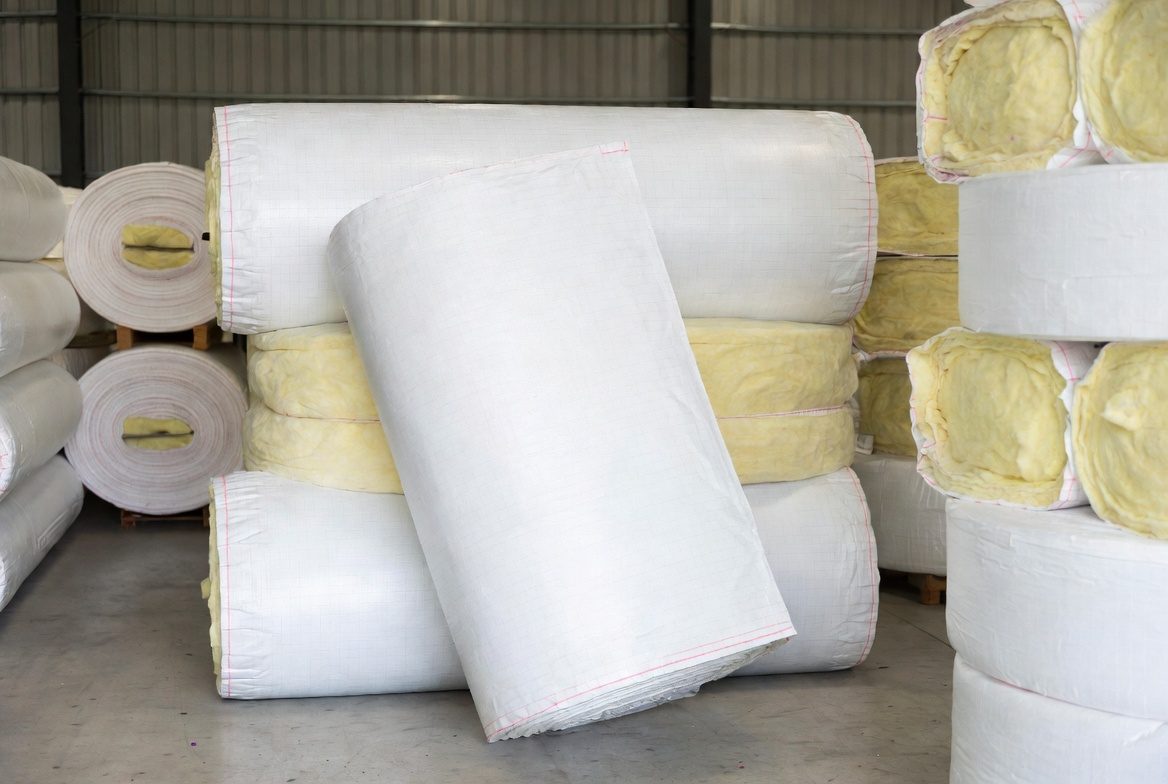
Most Popular System
White-faced / vinyl-reinforced facing. Stock thicknesses: 3″, 4″, and 6″.
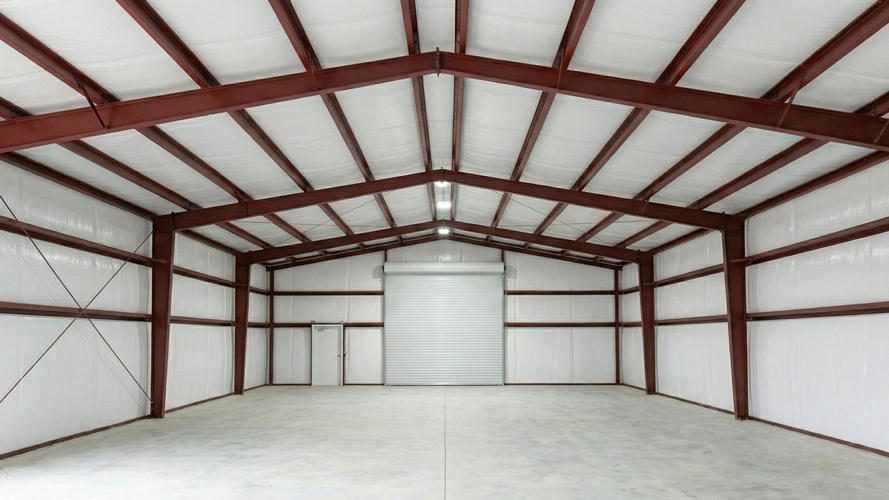
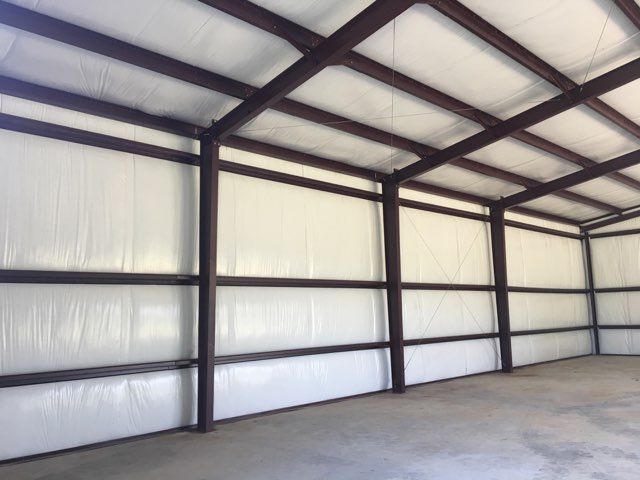
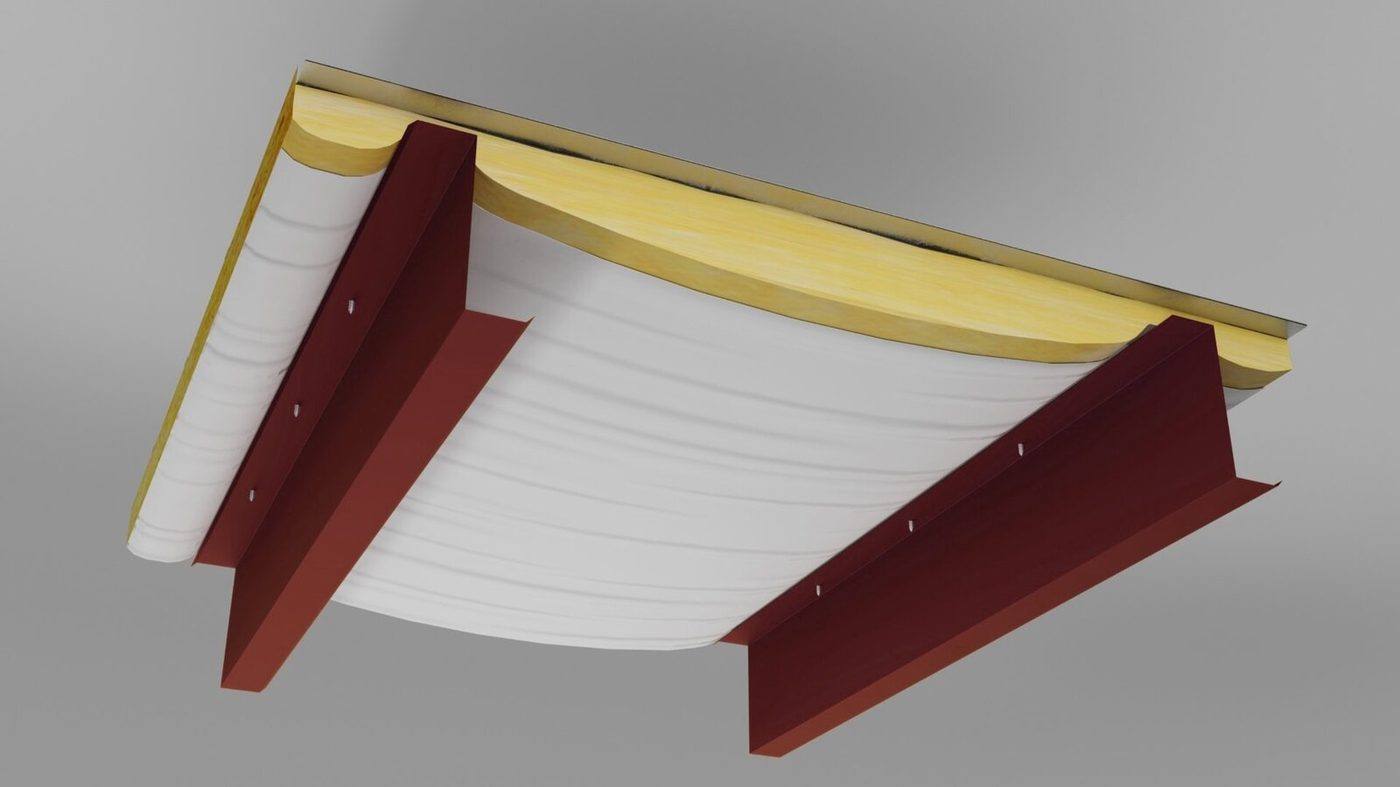
How it goes together: faced blanket over the Z, sandwiched under the panel at the flange. White facing drapes in the bay. The bay is not filled.
This is the insulation package on most pre-engineered metal buildings. A fiberglass blanket with a white, vinyl-reinforced facing is laid over the purlins (roof) and girts (walls) before the panels go on. The panels sandwich the blanket at the flange. The white facing looks into the building — it is the finished ceiling and wall look, and the vapor retarder.
Typical nominal R-10
Everyday condensation control and a finished white interior when the building is unconditioned or lightly used.
Typical nominal R-13
The middle thickness most shops, warehouses, and farm buildings land on — still one blanket, over the purlin.
Typical nominal R-19
More thermal resistance without changing the install method. Still faced, still over the purlin.
Nominal R is the product rating before compression at the purlin or girt. Installed assembly performance is confirmed on the quote.
01
Blanket runs over the purlin on the roof and the girt on the wall — before sheeting.
02
Roof or wall panel fastens through the blanket and compresses it at the flange.
03
White vinyl-reinforced facing looks into the building. Tab and tape the seams.
The facing is a white, vinyl-reinforced vapor retarder. It is the interior finish and the moisture control layer. Reinforcement helps it survive handling and erection.
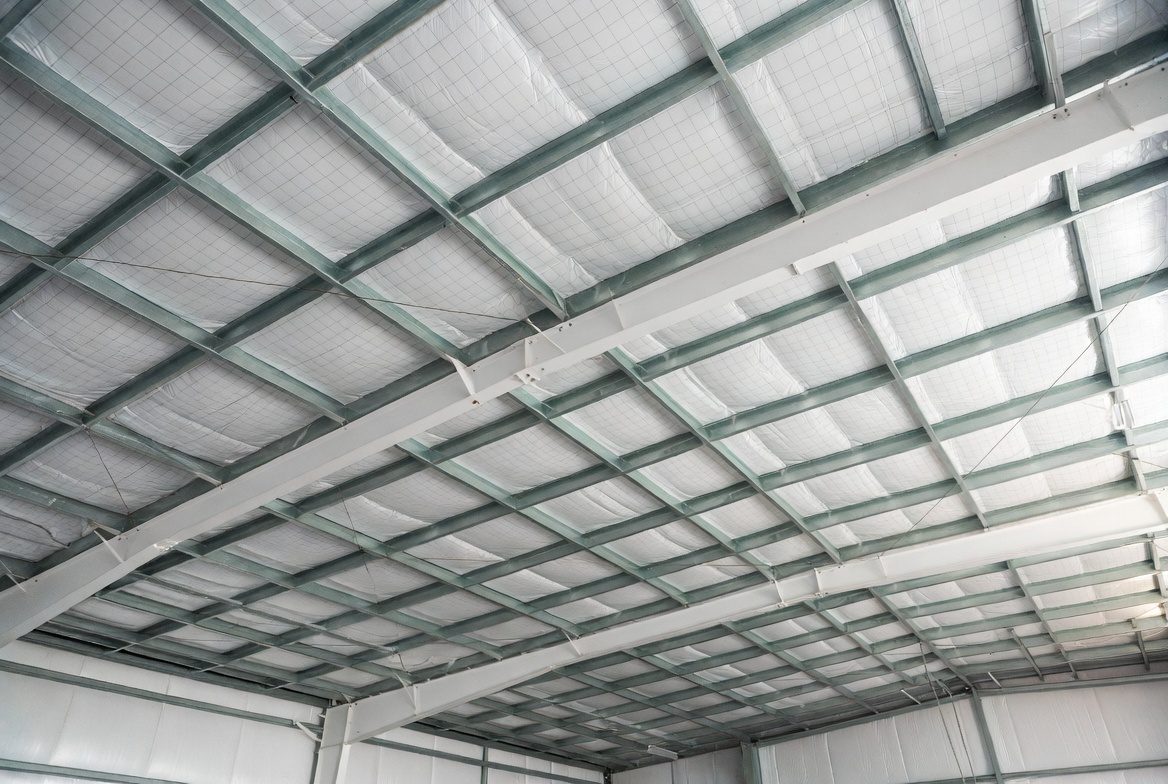
Spec note: this facing is a reinforced vinyl / PSK-style vapor retarder. Heavier puncture-resistant facings are available for high-abuse interiors (gyms, livestock, busy industrial).
Higher R-Value Option
Still goes over the purlin. Unfaced. Then the purlin / girt cavity is filled so R-value jumps. Same method on the walls.
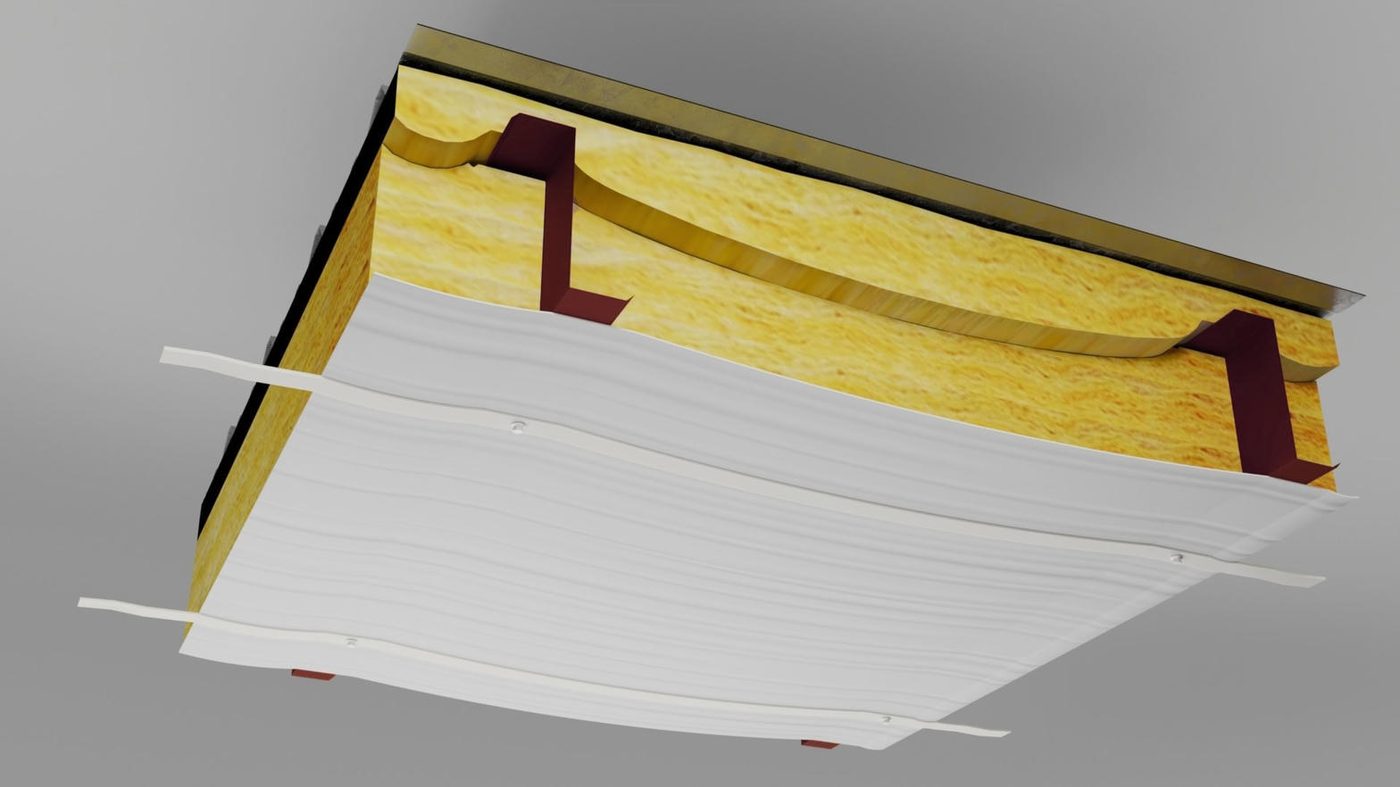
Unfaced over the Z and packed into the bay. White facing / liner is the underside.
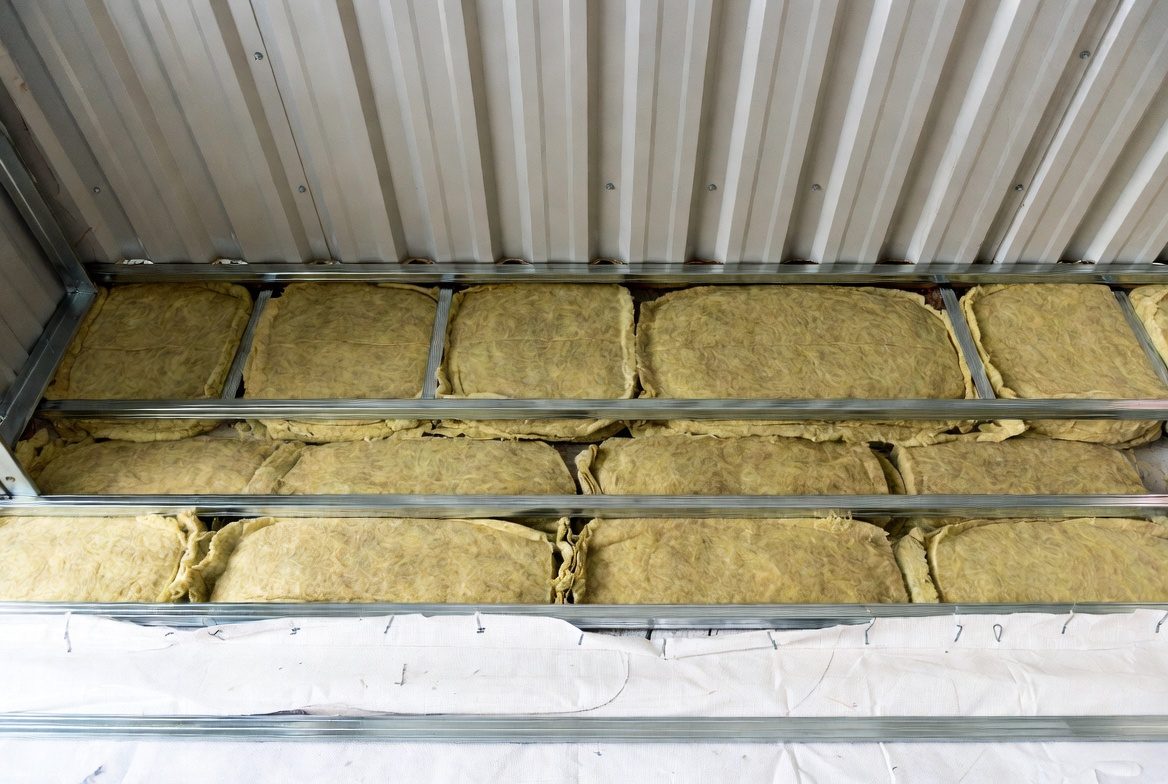
Install view: unfaced fill packed in the purlin cavity. A liner / banding can finish the underside.
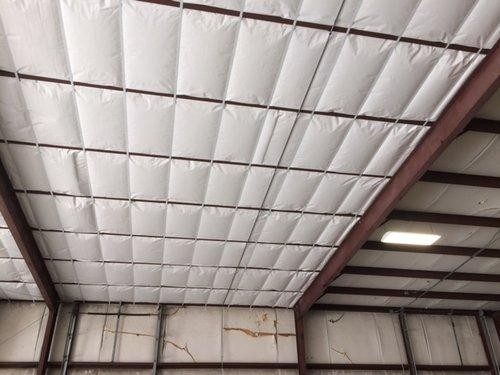
The second system also goes over the purlins and girts — but the blanket is unfaced. Instead of one faced layer compressed under the panel, unfaced insulation is placed over the members and into the purlin / girt cavity so that space is filled.
Filling the cavity is how you seriously increase R-value beyond a 3″ / 4″ / 6″ faced blanket. Use it when the building is conditioned, code-driven, or you want the shell to work harder year-round.
Over the member
Unfaced fiberglass still runs over the structural members so steel flanges are covered — not left as a thermal short.
Into the cavity
The same unfaced product drops into the bay between members. That filled depth is the R-value jump.
A separate interior liner or banding can finish the underside when the job needs a clean look. That is a finish option — not the name of the system.
Quick Compare
| Most popular — faced blanket | Higher R — unfaced cavity fill | |
|---|---|---|
| Where it goes | Over the purlin / girt | Over the purlin / girt and into the cavity |
| Facing | White vinyl-reinforced (interior finish + vapor retarder) | Unfaced. Liner optional if you want a finished underside. |
| Stock sizes | 3″ · 4″ · 6″ | Sized to fill the purlin / girt cavity |
| What you gain | Clean white interior, condensation control, first-cost winner | Serious R-value increase for conditioned / code-driven buildings |
| Best when | Shops, barns, storage, light commercial | HVAC, energy code, or a shell that has to work harder |
Typical nominal values for the faced blanket: 3″ ≈ R-10, 4″ ≈ R-13, 6″ ≈ R-19. Compression at the member reduces installed performance. Final R / U is confirmed on the One World Steel quote and project drawings.
Tell us roof vs. wall, 3″ / 4″ / 6″ faced blanket, or unfaced cavity fill for higher R.
Get a QuoteShare thickness or system preference. Home office in Bethpage, TN.